Open-Weight Models, October 2026: Which Can You Run?
Five open-weight models shipped in mid-October 2026, four of them between October 15 and 17. Here is what each one needs to run, what its license allows, and which fits your hardware.


9 min read · Last updated: October 24, 2026
Five open-weight models came out between October 13 and 17, 2026: Meta's Muse Spark Open, NVIDIA's Nemotron 3.5 Bolt, Reflection's Beam 1.0, DeepSeek-V4.1-Flash-1017 and Liquid AI's LFM2.5-24B-A2B. Most developers can run only two of them on their own machine. Nemotron 3.5 Bolt fits in 24 GB, and LFM2.5 runs on a laptop. The other three need data-center GPUs or an API.
Came here from Instagram, LinkedIn, X or YouTube? Here is the full source list you came for. Everything below is built from these, nothing else.
The announcements
- Meta: Introducing Muse Spark Open, Oct 15 2026
- Hugging Face: Welcome Beam, a 501B open model, Oct 16 2026
- DeepSeek API news: deepseek-flash now served by V4.1-Flash-1017, Oct 2026
- Liquid AI: LFM2.5-24B-A2B, Built for Fast On-Device Agents, Oct 13 2026
The model cards
- Muse Spark Open 816B-A42B on Hugging Face, Oct 15 2026
- NVIDIA Nemotron 3.5 Bolt 74B-A9B 24GB on Hugging Face, Oct 15 2026
- Reflection Beam-1.0-501B-A23B on Hugging Face, Oct 2026
- DeepSeek-V4.1-Flash-1017 on Hugging Face, Oct 17 2026
- Liquid AI LFM2.5-24B-A2B on Hugging Face, Oct 2026
The licenses
Key takeaways
- Four open-weight models landed in three days (October 15 to 17), and a fifth on October 13.
- Nemotron 3.5 Bolt is the one most developers can run: a 24 GB packed model with 74B total and 9B active parameters, tested on an RTX 5090.
- Muse Spark Open needs at least 700 GB of VRAM in NVFP4. Most people will use it through an API.
- Beam 1.0 (Apache 2.0) and DeepSeek-V4.1-Flash-1017 (MIT) have the cleanest licenses of the five.
- LFM2.5-24B-A2B reaches 184 tokens per second on an Apple M5 Max, but its license ends commercial rights at $10 million in annual revenue.
What happened in October 2026?
On October 15, Meta released the weights for Muse Spark Open, an 816B-parameter mixture-of-experts model with 42B active parameters. NVIDIA put Nemotron 3.5 Bolt on Hugging Face the same day. On October 16, Reflection's Beam 1.0, a 501B model under Apache 2.0, got its own launch post on the Hugging Face blog. On October 17, DeepSeek put V4.1-Flash-1017 on Hugging Face under the MIT license.
Two days before all that, on October 13, Liquid AI shipped LFM2.5-24B-A2B, a small model built for on-device agents. That makes five downloadable models in five days, with four of them inside three. Every one ships with a 131K or larger context window, and three of them reach 1 million tokens.
Why do these open-weight models matter to a developer?
Open-weight models matter because you can download the weights, run them on hardware you control, fine-tune them, and keep your data off someone else's API. The October releases show a clear split, though. The two biggest models cannot run on any single consumer machine, while the two smallest fit on a gaming GPU or a laptop.
"Open-weight" is not the same as "open source", and it is not the same as "free for any use". Each release has its own license, and those licenses differ a lot. Apache 2.0 and MIT let you do almost anything. Meta's license adds a branding rule and a revenue clause. Liquid's license switches off commercial use above a revenue line.
The other thing that matters is size. A parameter count alone tells you nothing about whether a model fits on your machine. What you need to know is the file size at the precision you will run, and what the vendor tested it on. Here is that data, pulled straight from the model cards.
Which of the five open-weight models can you actually run?
You can run Nemotron 3.5 Bolt on a single 24 GB-class GPU like an RTX 5090, and LFM2.5-24B-A2B on a high-end laptop. Beam 1.0 needs about four B200 GPUs. Muse Spark Open needs 700 GB of VRAM or two maxed-out Mac Studios. DeepSeek-V4.1-Flash-1017 is a 763B model, so most people will use it through DeepSeek's API.
| Model | Company | Total / active params | Context | License | What it needs (per vendor) |
|---|---|---|---|---|---|
| LFM2.5-24B-A2B | Liquid AI | 24B / 2.45B | 131,072 | LFM Open License v1.0 | Laptop class: 184 tok/s on Apple M5 Max |
| Nemotron 3.5 Bolt 74B-A9B 24GB | NVIDIA | 74B / 9B | 256K | OpenMDW-1.1 | 24 GB packed; tested on RTX 5090, DGX Spark, H100 |
| Beam 1.0 | Reflection | 501B / 23B | 1M | Apache 2.0 | NVFP4 about 280 GB; "plan for four B200s" |
| DeepSeek-V4.1-Flash-1017 | DeepSeek | 763B / not stated | 1M | MIT | Not stated on the card; multi-GPU server class |
| Muse Spark Open | Meta | 816B / 42B | 1M | Muse Model License | 700 GB VRAM (NVFP4), 2 TB (BF16), or two M5 Ultra Mac Studios |
Nemotron 3.5 Bolt: the one for a single GPU
NVIDIA's card describes a "24GB packed model". Most of the weights are quantized to about 2 bits using quantization-aware training, which means the model was trained knowing it would be squeezed. It is a Mamba-2 and Transformer hybrid with a vision encoder, so it takes images and video as well as text.
On NVIDIA's own table, the 2-bit Bolt scores 50.98 on Terminal-Bench 2.1, against 44.38 for Qwen3.6-35B-A3B in BF16. It also posts 86.43 on GPQA Diamond and 66.75 on BrowseComp. These are vendor numbers, but they compare the compressed model against full-precision rivals, which is the comparison you care about.
The simplest way to try it, straight from the model card:
docker model run hf.co/nvidia/NVIDIA-Nemotron-3.5-Bolt-74B-A9B-24GB
One catch. The card's Quick Start says the full feature set needs a specific nightly vLLM build plus NVIDIA's b12x kernels, and it lists Linux with Blackwell SM120 and SM121 GPUs under software integration. A GGUF variant is listed, but the card gives no llama.cpp or Ollama commands.
LFM2.5-24B-A2B: the one for a laptop
Liquid AI's model has 24B total parameters but only 2.45B active per token. That small active count is why it is fast on local hardware. Liquid reports 184 tokens per second on an Apple M5 Max and 114 tokens per second on an AMD Ryzen AI Max+ 395 using llama.cpp at Q4_K_M.
It is built for tool calling and agents. On Liquid's table it beats Qwen3.6-35B-A3B on LiveClaw (48.09 vs 38.19) and AutomationBench (27.69 vs 8.72). It loses on coding: 51.00 vs 66.20 on SWE-Bench Verified. Liquid also says it is a reasoning-only model, so it always writes out its thinking before answering.
docker model run hf.co/LiquidAI/LFM2.5-24B-A2B
Beam 1.0: the cleanest big license
Reflection's Beam is a 501B model with 23B active parameters, under Apache 2.0. The Hugging Face launch post gives the hardware plainly: BF16 is about 1 TB, NVFP4 is about 280 GB, and you should "plan for four B200s". FP8 runs on 8x H200 with SGLang.
The model card reports 81.6% on SWE-bench Verified and 80.1% on Terminal Bench v2.1 in BF16, and the NVFP4 numbers stay within about two points of BF16. If your company has the GPUs and needs a permissive license, this is the one to test first.
Muse Spark Open: open weights, API in practice
Meta's model needs "a GPU with at least 700GB of VRAM for NVFP4 and 2TB for BF16", per the model card. Meta also says it runs on two Mac Studios with M5 Ultra chips using MLX. For almost everyone else, the realistic path is one of the API providers Meta lists, including Groq, Together AI, Fireworks AI and OpenRouter.
Its card shows 89.2 on MCP-Atlas and 76.4 on Terminal-Bench 2.1. Read the license before you ship anything (details in the next section).
DeepSeek-V4.1-Flash-1017: open weights, API by default
DeepSeek calls this a minor update to its Flash model. The model card compares it with the previous Flash: 77.0 vs 74.2 on DeepSWE v1.1 and 42.3 vs 31.2 on Terminal-Bench 4.0. The weights are MIT licensed and total 763B parameters. The card gives vllm serve and SGLang commands, but you need server-class hardware to use them.
What changes in practice?
Three things change for developers this month: the API you may already be calling, the license math for self-hosting, and the floor for useful local models. Each one needs a small check, not a rewrite. Here is what to look at.
Your DeepSeek calls already changed
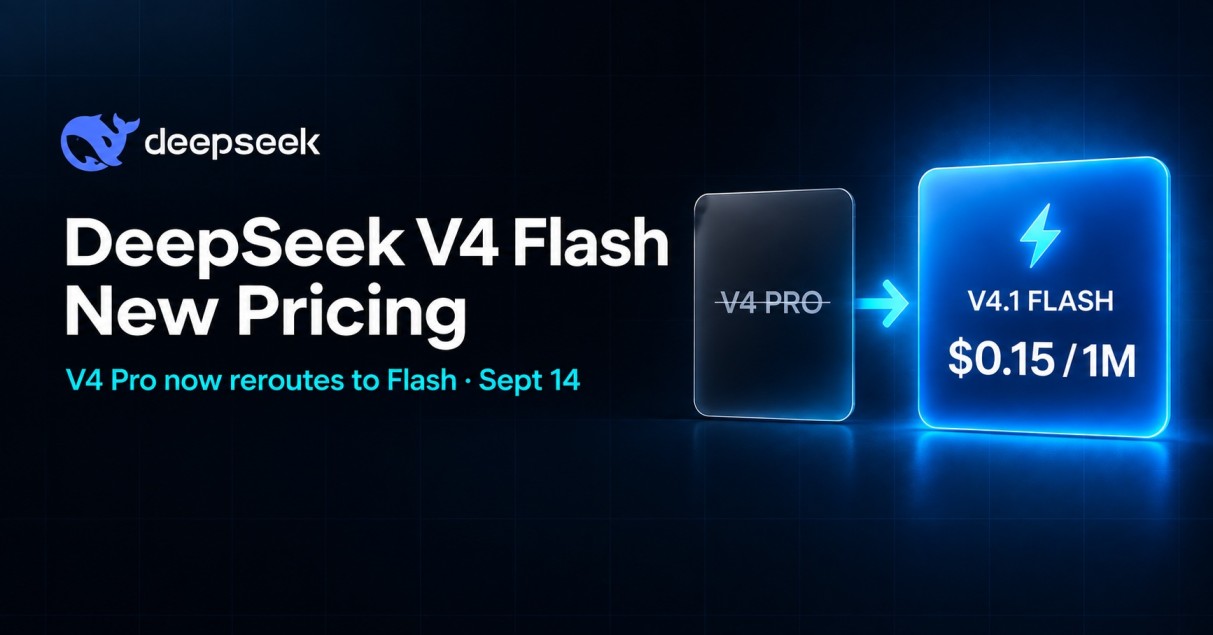
If you call DeepSeek's API, you are probably already on the new model. DeepSeek's news page says the deepseek-flash model name is now served by V4.1-Flash-1017. The legacy names deepseek-v4-flash and deepseek-v4-flash-vision-exp still work, but they now route to the new model and bill at the Flash price.
The model card also recommends max_tokens of at least 256K, with temperature 1.0 and top_p 1.0. If your code sets a low output cap, long agent runs may get cut off. We covered the earlier Flash pricing change in DeepSeek V4 Flash pricing and the V4 Pro reroute.
The licenses are not interchangeable
| License | Model | What to watch |
|---|---|---|
| Apache 2.0 | Beam 1.0 | Permissive |
| MIT | DeepSeek-V4.1-Flash-1017 | Permissive |
| OpenMDW-1.1 | Nemotron 3.5 Bolt | Read the terms before shipping |
| Muse Model License | Muse Spark Open | "Built with Muse Spark Open" must be shown prominently; model-as-a-service businesses above $20M revenue in 12 months need a separate agreement with Meta |
| LFM Open License v1.0 | LFM2.5-24B-A2B | Commercial use is not licensed once your legal entity reaches $10M annual revenue |
The Liquid clause is the one most likely to catch a growing startup. The license defines the threshold as "annual revenue of 10 million United States dollars ($10,000,000) or more", and it counts your legal entity, not one product. Meta's usage policy also says the model is "not intended for individuals under the age of 18", which matters if you build consumer apps.
Local agents are now realistic on one GPU
Until recently, running a capable agent model locally meant small dense models that struggled with tool use. A 2-bit, 74B model posting 50.98 on Terminal-Bench 2.1 in 24 GB moves that floor up. Both small releases also serve an OpenAI-compatible API, so your existing client code works if you change the base URL. If you are new to local models, our guide to running Gemma 4 locally covers the basics.
What should you do this week?
Start with the model that fits your hardware, test it on your own tasks rather than vendor benchmarks, and read the license before anything reaches production. A one-hour test on real prompts tells you more than any leaderboard. Here is the order I would follow.
- Check your DeepSeek integration. Search your code for
deepseek-v4-flashand confirm your output cap. Rerun one real agent task and compare length and cost. - Pick your local model by memory. 24 GB GPU: try Nemotron 3.5 Bolt. Apple Silicon laptop or an AMD Ryzen AI Max machine: try LFM2.5-24B-A2B.
- Run it behind an OpenAI-compatible endpoint. Both cards document a local server. Then point a plain request at it:
curl http://localhost:8000/v1/chat/completions -H "Content-Type: application/json" -d '{"model": "nvidia/NVIDIA-Nemotron-3.5-Bolt-74B-A9B-24GB", "messages": [{"role": "user", "content": "Write a bash one-liner that finds the 10 largest files in a directory."}], "temperature": 1.0, "top_p": 0.95}'
- Use your own 20 prompts. Take real tickets, real bugs and real tool calls from your app. Score the answers yourself.
- Try the big models through an API first. Test Muse Spark Open or Beam through a hosted provider before you price GPUs.
- Write the license down. Note which license each model uses and any revenue line it sets, so nobody finds out after launch.
FAQ
What is an open-weight model?
An open-weight model is one whose trained weights you can download and run yourself. It does not mean the training data or code is public, and it does not guarantee free commercial use. The license decides that, and the five October releases use five different licenses.
Which October 2026 open-weight model is best for coding?
On vendor-reported numbers, Beam 1.0 posts 81.6% on SWE-bench Verified and 80.1% on Terminal Bench v2.1, the strongest coding figures among models you can self-host under Apache 2.0. It needs about four B200 GPUs. For a single 24 GB GPU, Nemotron 3.5 Bolt is the practical choice.
Can I run Muse Spark Open on my computer?
Only if you have serious hardware. Meta's model card says it needs at least 700 GB of VRAM in NVFP4 or 2 TB in BF16, or two M5 Ultra Mac Studios using MLX. Most developers should use one of the API providers Meta lists, such as Groq, Together AI or OpenRouter.
Is LFM2.5-24B-A2B free for commercial use?
Yes, but only below a revenue line. The LFM Open License v1.0 removes the commercial license once your legal entity reaches $10 million in annual revenue. Above that, you need a separate commercial agreement with Liquid AI.
Pick the one model that fits your machine, give it 20 real prompts this week, and keep the free tools on Art of Code open for the boring parts. If you are still learning how to use these models day to day, read how to use AI to learn programming 3x faster.
Written by Adithya Guttha, Founder of Art of Code.
Sign in to like and save posts.
Keep reading


Discussion
Comments (0)
Want to join the conversation?
Sign in to commentNo comments yet. Be the first to comment!