What Is OpenClaw? The Personal AI Agent Going Viral in 2026
OpenClaw went from zero to 247K GitHub stars in 4 months, sold out Mac Minis, and got its creator hired to OpenAI. Here's what it is and why it matters.
Last week my friend asked me what's the one tool he should learn this year if he wants to stay relevant in tech.
I almost gave him the usual answer. Cursor, Claude Code, whatever.
Then I caught myself. The real answer for 2026 is something else entirely. Something that sold out Mac Minis across the country, exposed 138 critical security holes, and has its creator now sitting inside OpenAI building "the future of personal agents."
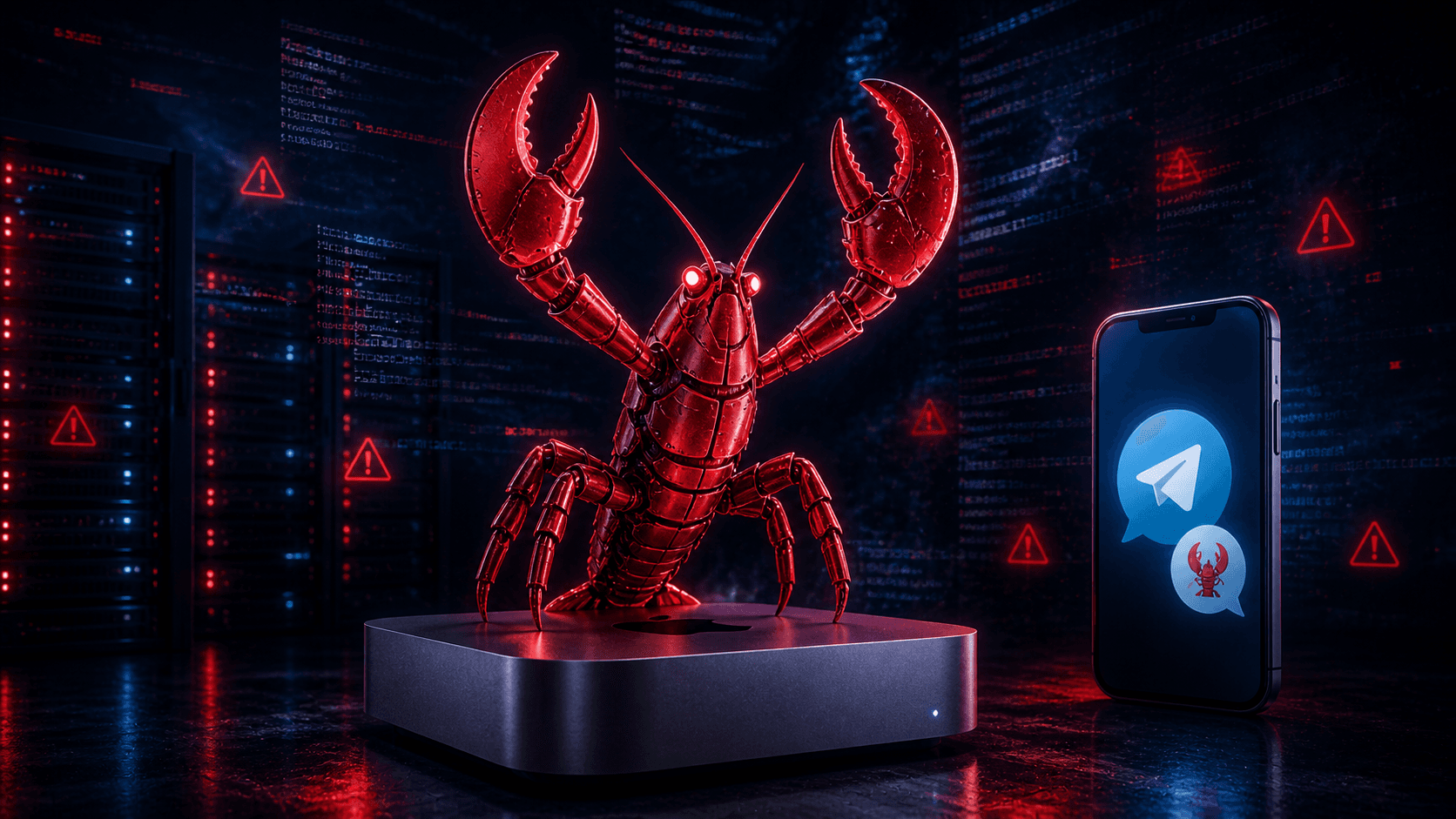
Meet OpenClaw. The lobster on your laptop.
What OpenClaw actually is
OpenClaw is an open-source project that lets you run a personal AI agent on your own hardware. Not in someone's cloud. On a Mac Mini, a cheap VPS, or whatever spare computer is collecting dust in a corner.
You connect it to the apps you already use. WhatsApp. Telegram. iMessage. Email. Once it's plugged in, it can read your messages, write replies, run scripts, search the web, and generally do small jobs you used to do yourself.
Think of it as your own private intern that lives in a folder on your computer and never sleeps.
The project went from zero to 247,000 GitHub stars in roughly four months. As of early 2026 it has more forks than most billion dollar open source projects accumulate in a decade. By any honest measure, it's the fastest growing developer tool of the year.
The Peter Steinberger story (because it's genuinely wild)
OpenClaw didn't come from a $40 billion AI lab. It came from one guy in Austria.
Peter Steinberger built and sold PSPDFKit, an iOS PDF library that powered apps you've definitely used. After the exit, he started messing around with AI agents as a hobby. He published the first version in November 2025 under the name Clawdbot.
Anthropic's lawyers showed up almost immediately. Trademark complaint. Steinberger renamed it Moltbot on January 27th, 2026. Three days later he renamed it again to OpenClaw because, in his words, "Moltbot never quite rolled off the tongue."
Within those same weeks, three things happened:
- Mac Mini sold out in multiple US cities as people raced to build always-on home AI servers
- Sam Altman publicly poached him to OpenAI
- Security researchers found 512 vulnerabilities in a single audit
Steinberger announced his move to OpenAI on February 14th, 2026. Sam Altman tweeted that he'd be "driving the next generation of personal agents." OpenClaw itself moved into a non-profit foundation that OpenAI now supports financially.
In April he gave a TED talk titled "How I created OpenClaw, the breakthrough AI agent." A few days later he was on stage at AI Engineer Europe walking engineers through how he was patching the security holes.
That whole arc happened in roughly five months. Hobby project to OpenAI hire to TED stage. It's the kind of curve you don't see anymore in software.
The security mess (read this before you install anything)
Be honest with yourself about this part. OpenClaw has had a brutal first few months on the security front.
By April 2026, the project had 138+ disclosed CVEs. Two of them sit at CVSS 9.9, which is the score reserved for "drop everything and patch this now."
Some of the worst issues researchers found:
- Nearly a thousand OpenClaw installs running on the public internet with no authentication. Anyone who knew the URL could just walk in.
- Researchers stealing Anthropic API keys, Telegram bot tokens, and Slack credentials, then running shell commands with admin rights on people's machines.
- A one-click remote code execution flaw (CVE-2026-25253) where visiting a single webpage could hand over your auth tokens.
Steinberger has been refreshingly direct about it. The team has triaged over 1,100 advisories and resolved more than 650. He's said publicly that most of the leftover reports are AI generated slop, but real ones keep coming in.
The lesson isn't "don't run OpenClaw." The lesson is don't run it the dumb way.
If you're going to use it:
- Run it inside a private VPS or container, not on your daily driver laptop
- Don't expose any agent endpoint to the open internet
- Rotate the API keys it touches monthly
- Pin to a specific release tag, not
main - Read the changelog before every update
This sounds boring but it's the difference between "neat tool" and "stranger uses my laptop to drain my crypto wallet at 3am."
Five things people are actually doing with it
The hype around OpenClaw is loud, but most of it is silly. AI smart toilets and AI sneakers and whatever else.
Here's what real builders are doing with it that's actually useful.
1. Smart inbox triage. Hook it to Gmail, give it a system prompt about which emails matter. It writes draft replies in your voice, marks the rest read, and pings you on Telegram only when something needs a human.
2. Family tech support, automated. This is the one I love. People have plugged OpenClaw into their personal Telegram, given it a system prompt about being them, and routed all the "hey can you fix my printer" texts from relatives through it. Pair it with ElevenLabs voice cloning and it sends back voice memos in your own voice. Emotional detachment from your family at scale.
3. Job application autopilot. Set the agent to scan LinkedIn for roles matching your stack, draft tailored cover letters, and send the apply request to your phone for one-tap approval. The "unemployment automation" meme on X is real and slightly tragic.
4. Daily content drafting. A lot of indie creators have OpenClaw scanning their note files, drafting tweets, drafting blog hooks, then dropping them into a review queue. The human still writes the final post but the cold start is gone.
5. Personal CRM. Forward every conversation with a client or potential customer to the agent. It quietly builds a database of who said what, when, and what they're working on. Next time you talk to them, you remember everything they told you in March.
None of these need a $200 a month SaaS. The agent runs on a $5 a month VPS with the right setup.
Why this moment matters for indie builders
Look at what just happened.
One person, building in public, no funding round, no growth team, no marketing budget, ships an open source agent. In four months it becomes the fastest growing dev project of the year, sells out Mac Minis, gets the founder hired to OpenAI, and reshapes how people think about personal AI.
That is the indie playbook in 2026. Build the boring missing piece. Ship it on GitHub. Let the community do the marketing.
The interesting question is not "should I use OpenClaw." It's what's the next OpenClaw. For every personal-agent-on-your-laptop category, there are five adjacent categories that haven't been built yet. Personal coding agent for solo founders. Personal customer support agent for one person businesses. Personal investing research agent. Personal language tutor that lives in WhatsApp.
The winner in each of those probably won't be a SaaS startup with $40 million in funding. Going by the OpenClaw evidence, the winner is going to be one developer in a country you didn't expect, shipping nights and weekends, who doesn't ask permission.
What to do this week
If you're a builder reading this, two concrete actions.
First, install OpenClaw on a cheap VPS (Hostinger, DigitalOcean, whatever). Not on your laptop. Spend an hour wiring it to one app you actually use. Telegram is the easiest. Just to feel what the abstraction feels like in 2026.
Second, list five tasks in your week that you do more than once. Not creative work. The boring routing-and-replying stuff. Those are the slots an agent fits into. Most people overestimate what an agent should do and underestimate where it actually wins.
OpenClaw isn't the final form. It's barely six months old and it's already had two name changes, a thousand security advisories, and a founder exit to OpenAI. By the time this article is a year old, the lobster will look completely different.
But the shape of it, a personal agent that lives close to you, talks through the apps you already use, and runs on cheap hardware, that shape is here to stay. The earlier you start playing with it, the earlier it stops feeling like magic and starts feeling like a tool.
A boring tool. Which is exactly when it starts paying for itself.
Written by Curious Adithya for Art of Code.